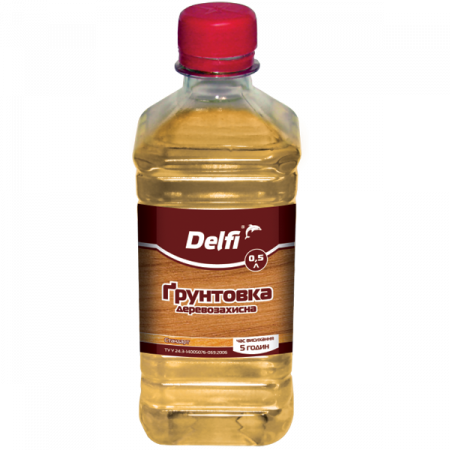
Specification
- it penetrates deeply into the wood
- it dries quickly
- it protects from rot, mould and fungi
Sphere of application
It is intended for the previous treatment of wooden surfaces (doors, window frames, sawn and chipped timber) before further coating.
Content
Technical data
| Consumption standard of 1 layer | 100-160 ml/m2, depending on the type of surface. |
| Solvent | solvent TM DekART or odorless solvent ТМ Maxima. The primer is ready to use and needs no diluting. |
| Application | Apply with a short-haired roller, a brush or a spraying gun. |
| Drying period (23 °С, 50% RH) | 5 hours. Drying period increases if the temperature is getting down and relative air humidity is getting higher. |
| Solids content (DSTU ISO 3251) |
> 5 % |
| Density (DSTU ISO 2811-1) | 0,8±0,02 g/cm3 |
| Warranty period | 12 months from the date of manufacturing. |
| Packaging | 0,4kg (≈ 0,5l) |
Color
Application instruction
The condition for receiving a desired result is following directions for using the paint product and preparing the surface.
1. Surface preparation
Wood, which is going to be primed, must be clean, dry, and smooth. Clean it of dust, grease, and resin stains.
We recommend priming new or fully cleaned wood that is free from old coatings (paint or wood-protective products, etc.) Old coatings must be removed mechanically (a scratcher, a wire brush), thermally (a hot air blower, infrared radiation), or chemically (paint-removing solutions). Avoid cleaning methods that can damage the base surface (for example, a sandblaster).
We recommend polishing the wood along the fibers to make it more attractive, emphasize the pattern of the wood layers, improve the conditions of application, and prolong the exploitation period of the finishing paint product. Remove abrasive dust after polishing.
We recommend rounding off all sharp edges of wood.
Remove mechanically resin deposits from the surface with a spatula or a scratcher. After that, the places where were the resin, grease stains, rests of cleaning solutions, rub with odorless diluent TM Maxima.
In case the wood is infected by bluestain, mould or fungi, remove all infected areas: at first mechanically, then treat the wood with antiseptics for wooden surfaces TM Farbex. Defective surfaces, after mechanical impact, must be corrected with Putty TM Maxima. Plastered surfaces must be polished and dusted off.
Wood humidity before treatment must be less than 20%.
Before using other products (adhesive, antiseptics, putty, etc.), we recommend testing the compatibility on a small area of the surface following technical recommendations or specialists’ consultations.
2. Applying
Stir the product thoroughly before use. The product is ready to use and needs no dilution. Filter it if necessary.
To provide a protective effect on the wooden surface, apply 1-2 coats of the primer. Treat the edges of wood very thoroughly until full saturation.
Do not apply a subsequent coat before 5 hours after application.
If you undercoat horizontal surfaces and the consumption of the primer is higher, the full drying of the surface will take longer.
Carry out works at an air and working surface temperature from +10 ºС to +35 ºС and relative air humidity less than 80%. Do not apply the primer under direct sunlight, strong wind, and precipitation. The undercoated surface must not be affected by precipitation until the finishing coating is applied.
We recommend applying the primer with contact methods (a roller, a brush), rubbing it into the wooden surface. The instrument must be recommended for solvent-based products.
When you apply with a roller, we recommend using a cuvette for homogeneous wetting of the tool. We do not recommend using foam rubber rollers.
For a quality coating, you must obtain the painting skills.
We recommend priming the surface along the wood fibers!
The primer consumption and "penetrating" effect substantively depend on the type of wood and its age. When you work with hard and exotic species of wood, you must carry out testing application of all coats with protective coating on a small area following all requirements.
Other additional advice: when you work with wood-protective primer.
When primed wooden products have been dry, they can be sawed, chopped, and others. However, newly appeared surfaces are recommended to be primed as well.
Between the layers of the primer, we recommend light polishing with the removal of abrasive dust.
The primer protects and prevents biocorrosion, but it does not protect against insects, fungi, and mold if the wood has already been infected.
The primer is not a finishing product; it must be protected with a finishing coating. The primer cannot be tinted.
The primer raises the fibers of the wood; therefore, you must polish, dust off, and then apply a finishing product.
We do not recommend allowing extra primer on the wood. If necessary, extra stains of primer must be immediately removed from the surface with a roller, a brush, or a cloth. Do not let the primer get dry.
After priming, we recommend using nails, staples, screws made of galvanized steel or stainless steel. If you use iron elements in wooden products, they must be previously protected against corrosion with special primers or other products.
Compatibility with other coatings
Depending on the conditions of exploitation, you may use the primer with various finishing coatings. The examples of compatibility are given below. To get more detailed recommendations, you may consult the specialists of POLYSAN.
Previous coat – we recommend applying the primer on a clean surface.
Subsequent coat – alkyd solvent-based products.
We recommend testing compatibility of the products on a small area of the surface.
3. Tool cleaning
Clean tools with a solvent after application and then if necessary with warm water and detergents. Dry primer may be removed only mechanically.
Use with this product
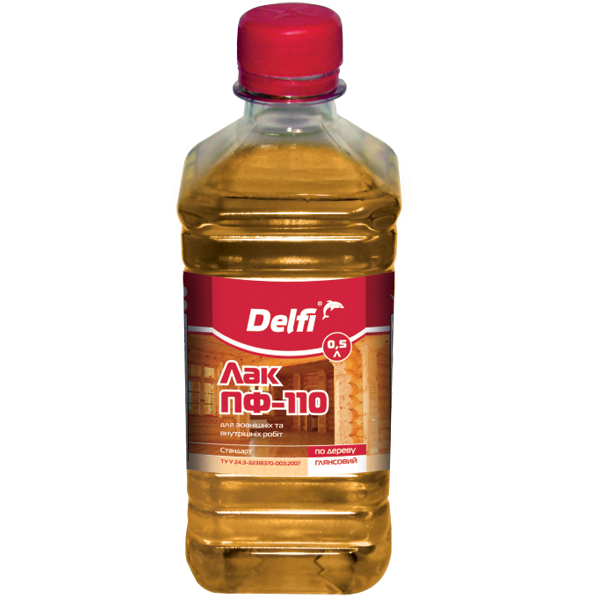
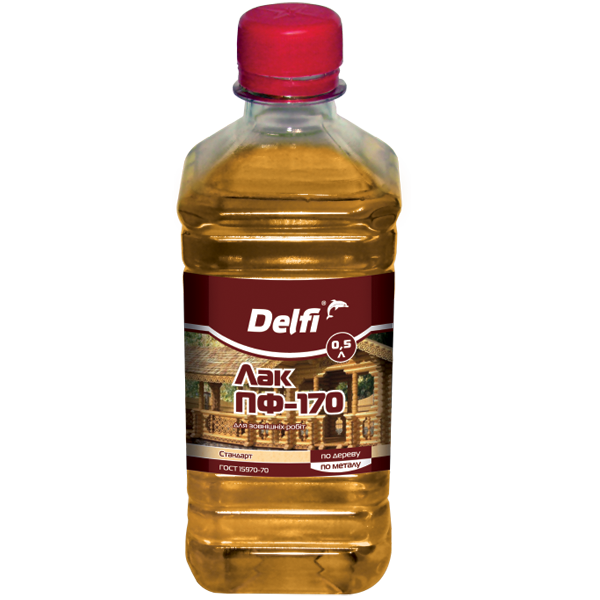
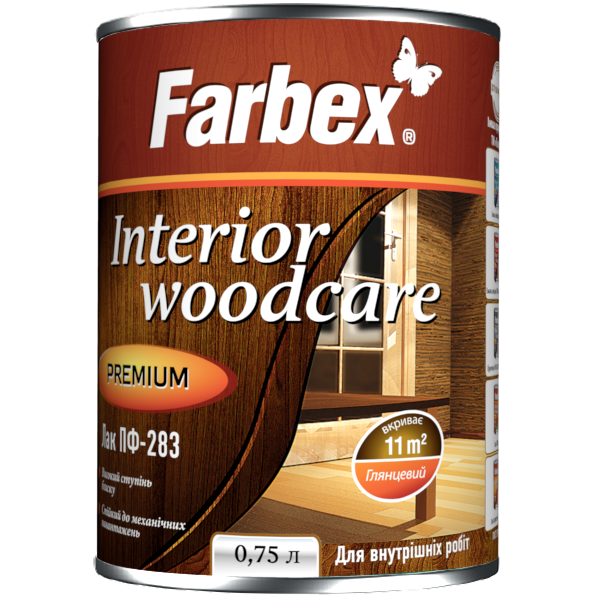
Primer for wood Delfi
Primer for woodповністю
Flow calculator
Consumption standard of 1 layer
When calculating the area to be painted, you need to subtract the area that will not be painted. (windows, doors, etc.)
Paint consumption may vary depending on dilution and uniformity of application of the paint.