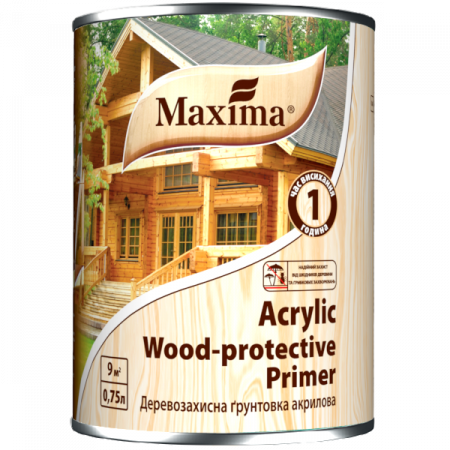
Maxima
Acrylic wood-protective primer
Specification
It does not change the wood color. It penetrates deeply into the wood fibers. It effectively protects wood against pests and fungi and dries quickly. It has high adhesive property with bases. It is applied on a non-coated surface or surface, cleaned from old paint coating. The primer is ready to use and does not need dilution with water.
Sphere of application
It is intended for undercoating of different kinds of wood, MDF, fiberboards, wood chipboards, wooden panels, new or cleaned from old paint materials and wooden surfaces (walls and ceilings, doors, window frames, furniture, boat landings, terraces, etc.) before coating with water-based materials. For interior and exterior use.
Content
Technical data
| Consumption standard of 1 layer | 80-125 ml/m2, depending on kind of wood and the quality of timber, as well as on way of application. |
| Thinner | Water |
| Application | Apply with a brush, a roller or a spraying gun. |
| Drying period (23 °С, 50% RH) | 1 hour. Drying period increases if the temperature is getting down and relative air humidity is increasing. |
| Solids content (DSTU ISO 3251) |
16±1 % |
| Density (DSTU ISO 2811-1) | ≈ 1g/сm3 |
| Warranty period | 36 months from the date of manufacturing (at the temperature from +5 °С till +35 °С) |
| Packaging | 0,75kg (≈ 0,75l) |
Color
Application instruction
The guarantee of the desired result is following all directions for the paint product use and surface preparation.
1. Preliminary preparation
Timber intended for priming must be dry, smooth, and free of dust, grease, and resin stains.
We recommend priming new or old wooden surfaces, completely cleaned of old coatings (paint products). Old coatings must be completely removed mechanically (a scraper, a wire brush), thermally (a hot-air gun, infrared radiation), or chemically (paint-removal solutions). You should avoid such methods of cleaning that can damage the timber (for example, sand-blasting machine).
To make it attractive, emphasize the pattern of timber, improve application properties, prolong the exploitation period of finishing paint product, we recommend polishing the timber along the fibers. Abrasive dust shall be removed.
We recommend rounding off all sharp edges of the wooden surface.
Remove all resin deposits from the surface mechanically (with a spatula or a scratcher).
Then the areas that were contaminated shall be treated with water and the corresponding detergents.
If the timber is affected by bluestain, mould, or fungi, remove all defective areas: first mechanically and then treat the timber with antiseptic for wooden surfaces TM Farbex. Created uneven surfaces shall be corrected with Putty TM Farbex. All corrected surfaces shall be polished and dusted off.
Timber humidity must be less than 20% before priming.
Before using subordinate products (adhesives, antiseptics, plasters, detergents, etc.), we recommend testing their compatibility on a small area of the surface, following the directions or specialists' hints.
2. Application
Stir the primer thoroughly before use. The primer is ready to use. Filter it if necessary.
Treat the edges of timber extra carefully until full absorption.
When you prime horizontal surfaces and a higher consumption of the primer, the drying period can continue longer.
Carry out the work at air temperatures and surface temperatures from +10 ºС to +30 ºС, with relative air humidity less than 80%. Do not apply the primer under direct sunlight, strong wind, and precipitation. The primed surface shall not be affected by precipitation before the finish coat covers it.
We recommend applying the primer with contact methods (a roller, a brush), rubbing it into the timer. The tool must be intended for water-based products.
When you apply the primer with a roller, use a cuvette to make the wetting of the tool more homogeneous. If you use a spraying gun, follow all directions for it.
You have to obtain painting skills, especially if you use professional equipment.
Prime wooden surface along the fibers of timber!
The consumption of the primer and the effect of "stain" substantially depend on the species and age of the wood. When you work with hard and exotic species of wood, you must test by applying all coats of protective coating on a small area and following all requirements.
Subsequent works must be carried out 4 hours after the last application of the primer.
Additional hints for work with wood-protecting primer.
You can saw, chop, etc., the wooden product after the primed surface has dried. However, we recommend treating fresh surfaces with the primer as well.
We recommend light polishing the surface between priming sessions and dusting off after them.
The primer protects and prevents biocorrosion but is not effective against insects, fungi and mould if the wood was corrupted before priming.
The primer is not a finishing product, and it must be protected with finishers. The primer can not be used as the tinting base.
The primer pushes up fibers of the timber, that is why you must polish the surface, dust it off, and then apply the finishing product.
Do not overprime the surface. Remove stains immediately from the surface with a roller, a brush, or a cloth. Don't let it get dry.
We recommend using stainless or galvanized nails, screws, etc. for primed wood. If you use iron elements for wooden constructions, they must be preliminarily protected against corrosion with special primers and other products.
Compatibility with other coatings
Depending on exploitation conditions, the primer can be used with different finishing products. The examples of compatibility are mentioned below. We recommend calling the specialists of POLYSAN to receive thorough recommendations.
The first coat is recommended on a clean surface.
A subsequent coat must be acrylic water-based products.
We recommend testing the compatibility of the products on a small area of the surface.
3. Tool cleaning
Clean tools with water after application thoroughly.
Use with this product
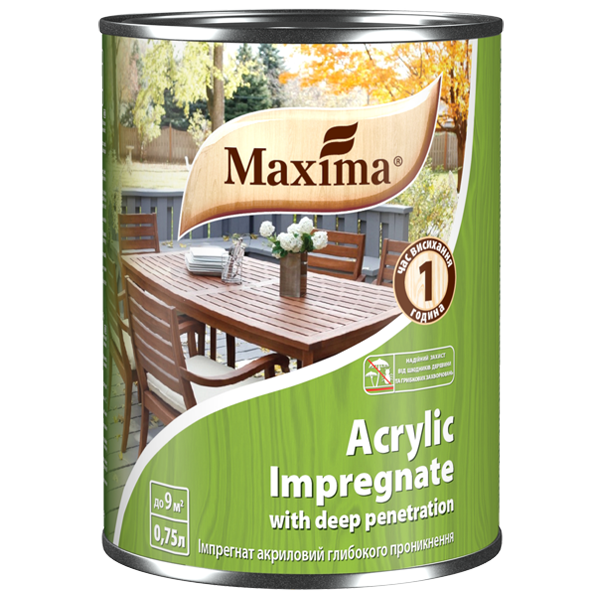
Tips
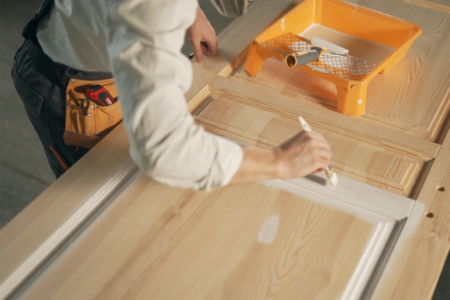
What Coating is Suitable for Interior Wooden Doors and MDF
Wooden interior doors have always been and remain popular due to the natural beauty of timber and the exploitative traits of this material. It has good sound and heat insulation. Wood is reliable, practical and durable. However, due to the …
Гумова фарба для стін
Поява гумової фарби докорінно змінила сприйняття споживачів про властивості і застосування фарби. Вона за короткий час завоювала любов споживачів своєю універсальністю і характеристиками. І хоч гумова фарба підходить для різних типів поверхні, у цій статті пропонуємо детальніше розглянути, чому варто …

Як самостійно пофарбувати фасад?
Хочете оновити зовнішній вигляд будинку, але не знаєте з чого почати? Користуйтесь порадами із цієї статті, щоб отримати результат, яким ви будете задоволені. Вибір фарби Робота по оновленню фасаду починається із вибору якісної фарби, яка забезпечить гарний зовнішній вигляд будинку …
Primer for wood Maxima
Primer for woodповністю
Flow calculator
Consumption standard of 1 layer
When calculating the area to be painted, you need to subtract the area that will not be painted. (windows, doors, etc.)
Paint consumption may vary depending on dilution and uniformity of application of the paint.